Cart
0
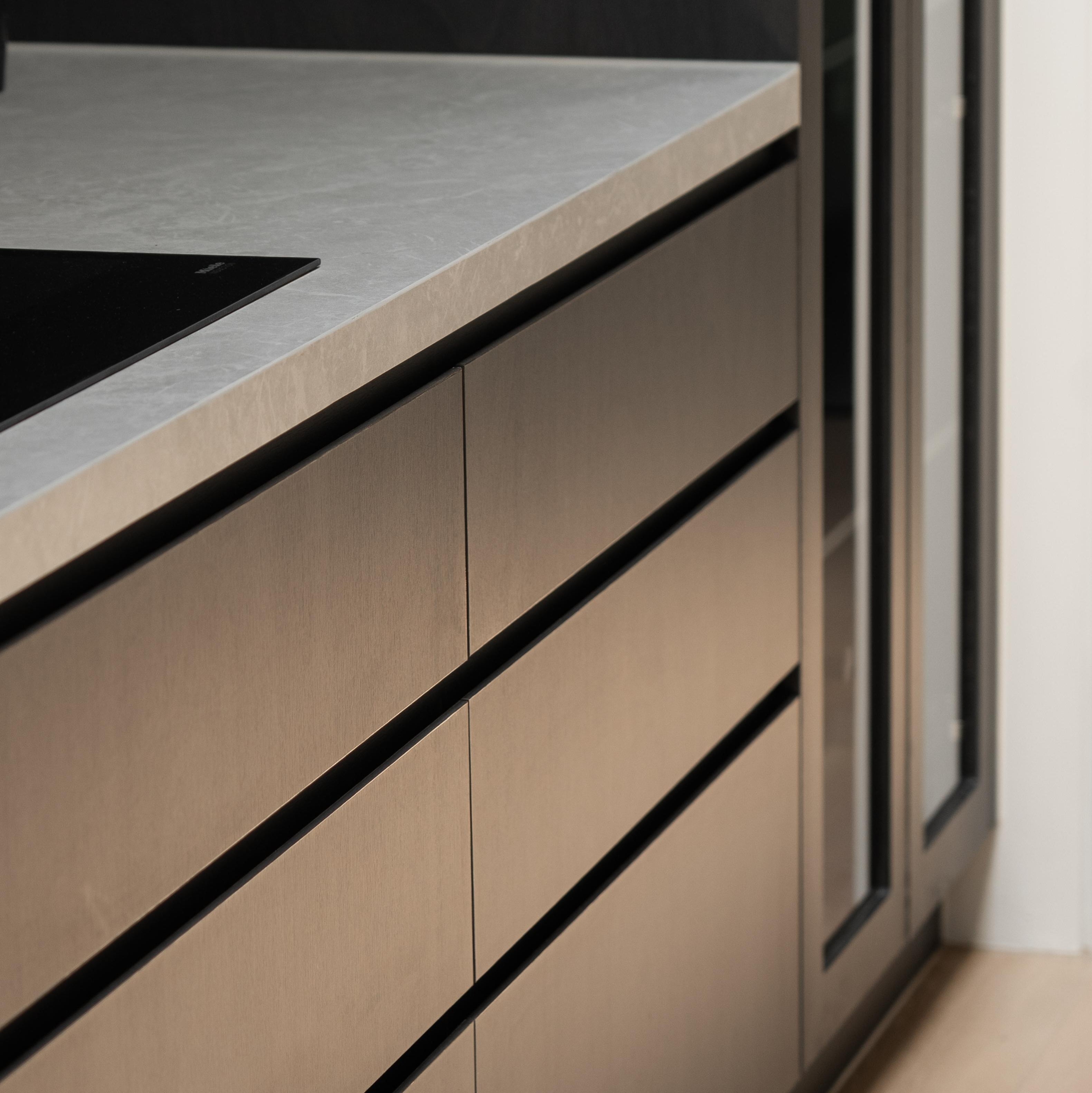
In recent years, traditional handles are slowly being replaced in modern kitchens. Handleless joinery—also known as push-to-open or finger pull cabinets—offers a sleek and elegant solution. These cabinets can be opened with a light press, touch, or pull, creating a seamless, minimalist aesthetic. But when is this design most suitable, and what are its pros and cons?

1. Common Handleless Cabinet Types
-
Push-to-Open: This uses concealed spring mechanisms or magnets inside the cabinet. A light press with your finger activates the mechanism to open the door or drawer.
-
Integrated Finger Pulls: Some cabinets feature a recessed groove or hidden finger pull along the edge or front of the panel. This can be paired with a 45° bevel cut on the door panel for easier opening and adds a subtle design element.

-
Frame-Style Doors with Finger Pulls: Often seen in Japandi-inspired kitchens, a wood slab with an integrated finger groove is attached to the door panel. This design supports clean, linear edges and aligns perfectly with a minimalist aesthetic.

2. Advantages of Handleless Joinery
- Sleek & Spacious: Without visible handles, cabinet fronts look clean and uncluttered, giving the kitchen a more spacious and streamlined feel. Continuous lines across cabinetry can be easily achieved.
- Safety: No protruding handles reduce the risk of bumps and knocks, making it ideal for family homes.
-
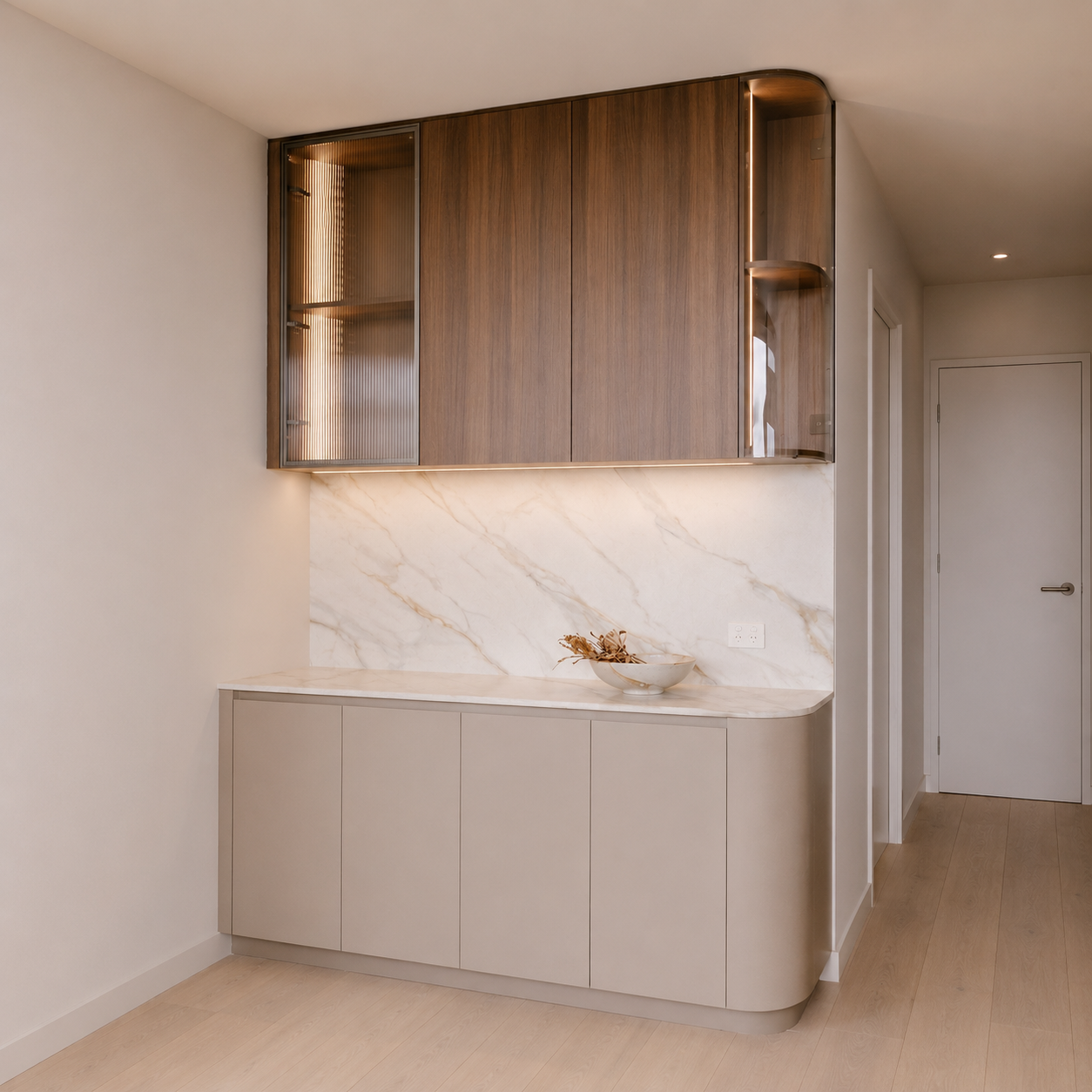
Concealed & Flexible Design: Handleless kitchens are perfect for hidden or integrated elements, like concealed pantry doors.

- Ease of Cleaning: Without handles, there are fewer nooks and crannies to clean, making maintenance simple.
-
Design Opportunities: Some handleless systems allow for integrated LED lighting, creating an ambient glow along the groove. Many options can be custom-shaped—curved or angled—to suit the home’s architectural features.

3. Considerations & Limitations
- Push-to-Open Limitations: Heavier or taller doors may not open reliably over time with push mechanisms, as the hardware is not always designed for large panels.
-
Cost: Handleless joinery often comes at a higher price than standard cabinetry with handles due to the additional hardware and precision required.
-
Space Inside Drawers: Finger pulls or recessed grooves may slightly reduce internal storage space.
- Appliance Compatibility: Some appliances, like fridges or wine cabinets, still require traditional handles due to the force needed to open them.

Conclusion
Handleless joinery is a modern, practical, and visually appealing solution for today’s streamlined kitchens. While there are some limitations, the benefits—clean lines, easy maintenance, and design flexibility—make it an excellent choice for contemporary Australian homes.
Whether you’re aiming for a minimalist, Japandi, or modern elegant style, handleless kitchens are here to stay. If you’re interested in achieving a handleless kitchen, feel free to get in touch with Fantaci.