Cart
0
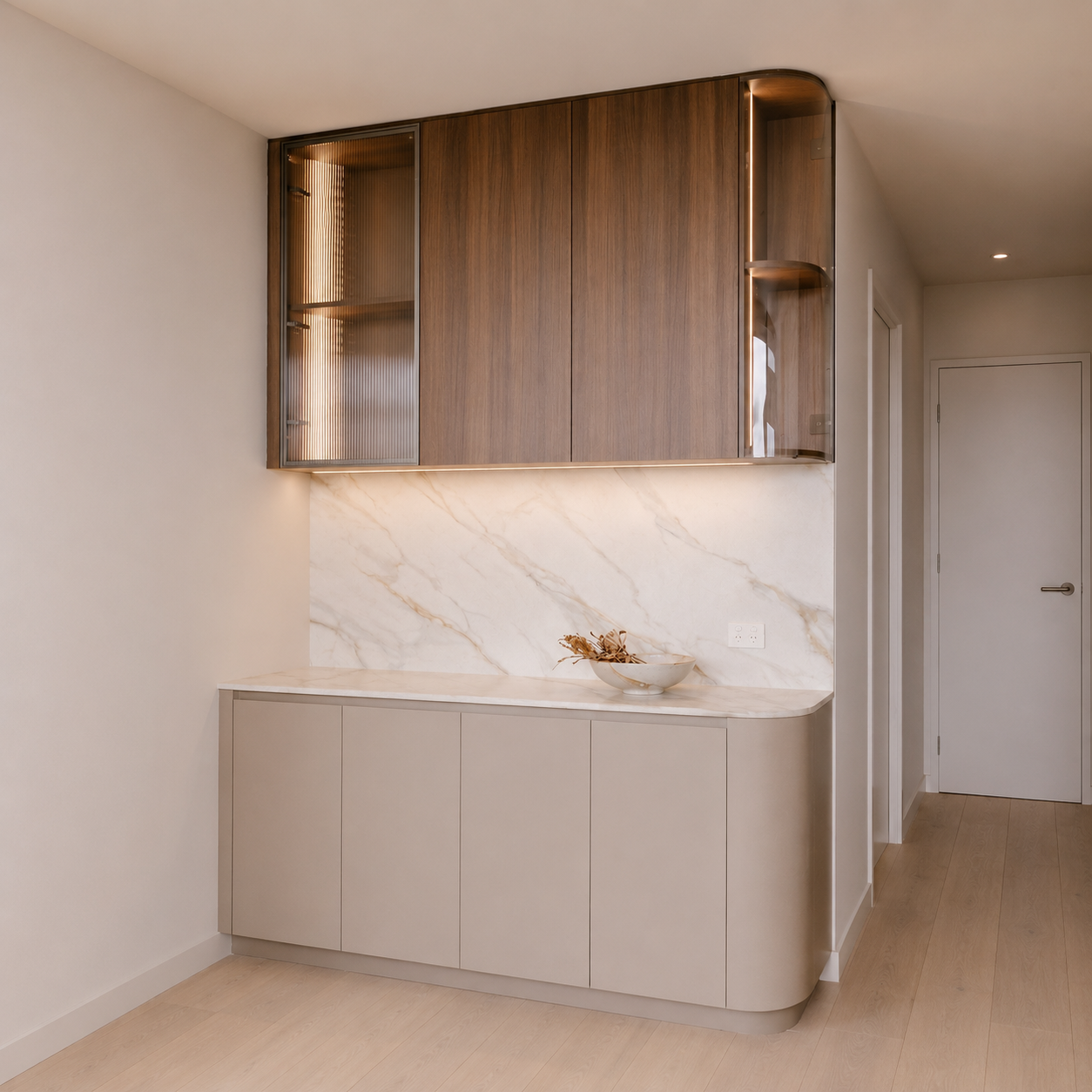
When designing custom cabinetry, the top detail is often just as important as the doors, handles and internal layout.
Most cabinets need a clean finish on all visible sides, but the top section usually gives us more design options. This becomes especially important when we need to hide pipes, air-conditioning bulkheads, uneven ceilings, or when we want the cabinetry to feel more built-in and considered.
Here are four common ways to finish the top of your cabinetry.
1. Bulkhead Finish
A bulkhead is one of the most common ways to finish the top of a cabinet.

How it works:
An MDF panel is built above the cabinetry and painted to match the wall or ceiling. Cornices can also be installed over the bulkhead, allowing the original ceiling detail to continue.
Why it works:
This is a great option when the cabinetry colour works well with the wall colour. It helps the joinery feel more built-in, while also allowing pipes, services or air-conditioning bulkheads to be neatly hidden.
What to consider:
If the cabinet door colour is very different from the wall colour, the overall look may feel less seamless.
2. Matching Door Panel Finish
This option uses the same material or colour as the cabinet doors to finish the top section.

How it works:
A matching panel is installed above the cabinet doors, usually between 50mm and 200mm high, depending on the ceiling height and design.
Why it works:
This creates a more complete and continuous cabinetry look. It works especially well with timber-look finishes or door colours that contrast strongly with the walls. Visually, it can also make the cabinetry feel taller and more refined.
What to consider:
The ceiling cornice usually needs to be cut on both sides of the cabinetry, rather than running continuously across the top.
3. Shadowline Detail
A shadow line is a more minimal and design-led way to finish the top of cabinetry.

How it works:
A horizontal top filler panel is installed above the doors, but it is recessed slightly, often by around 20mm. The upper section is then finished neatly with another panel or built-in detail.
Why it works:
This creates a subtle shadow gap and adds depth to the cabinetry. It is especially suitable for solid-colour doors and more contemporary interiors, giving the joinery a cleaner and more refined look.
What to consider:
A shadowline detail requires accurate manufacturing and careful installation. Small gaps or uneven ceilings can be more noticeable with this type of finish.
4. Open Top Design
Not every cabinet needs to go all the way to the ceiling. In some cases, leaving space above the cabinetry can be a practical option.

How it works:
The cabinetry stops below the ceiling, usually leaving around 300mm to 500mm of open space above.
Why it works:
This can reduce the overall cost and also provides space to store longer items that may not fit easily inside standard cabinets.
What to consider:
Visually, it can feel less finished and may collect dust over time. It is usually better suited to storage rooms, laundries, garages, or more budget-conscious projects rather than feature areas.
Final Thoughts
There is no single best way to finish the top of cabinetry. The right option depends on the ceiling height, wall colour, door finish, budget and whether any services need to be hidden.
A bulkhead can make cabinetry feel built-in and clean. A matching panel creates a stronger cabinetry feature. A shadowline adds a refined modern detail, while an open top design can be practical and cost-effective.
In custom joinery, these small finishing details often make the biggest difference. They help the cabinetry feel more complete, more intentional, and better suited to the way the home is used every day.
Interested in custom cabinetry or thoughtful joinery design? Follow Fantaci for more design ideas, inspiration and practical tips for your home.